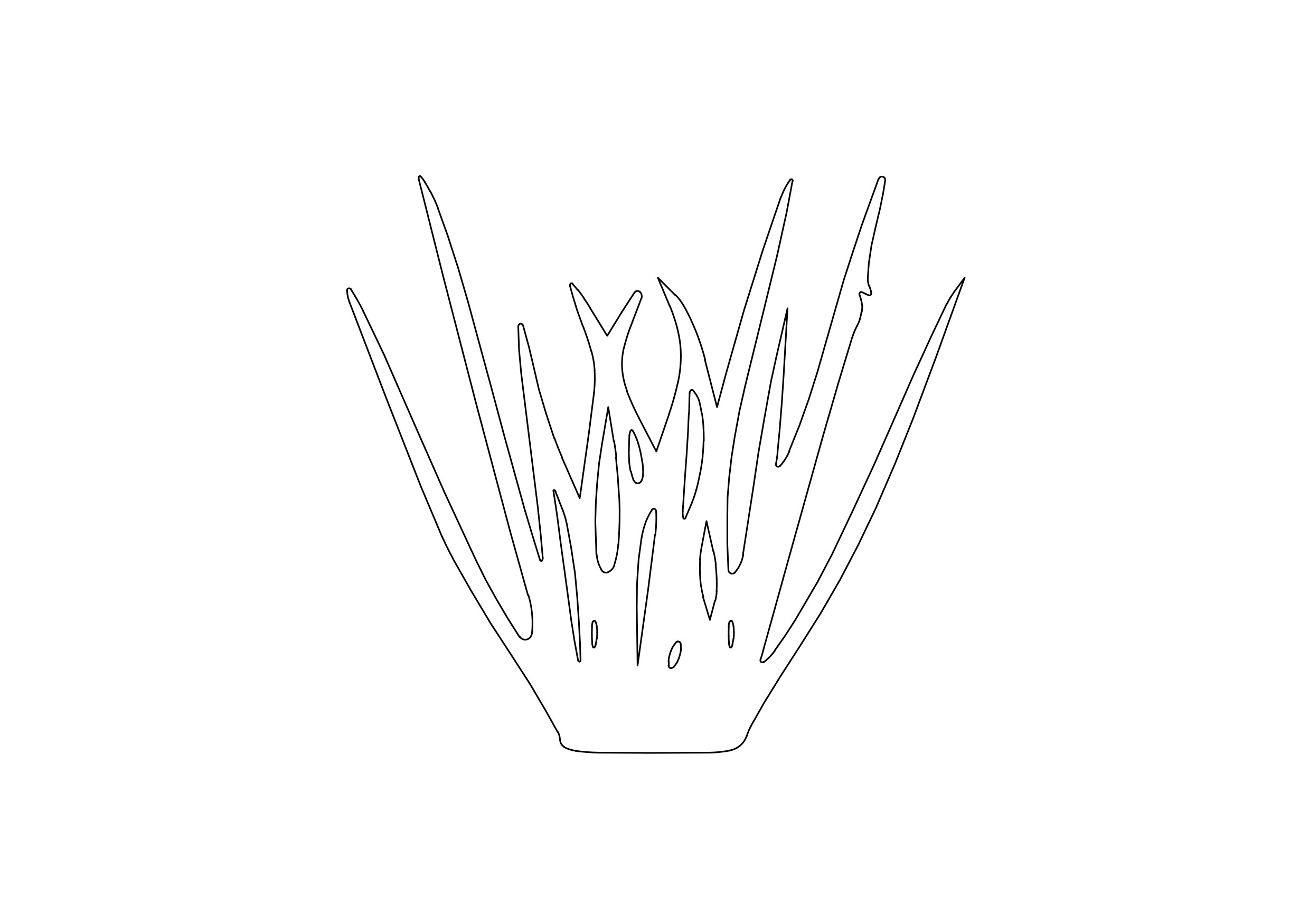
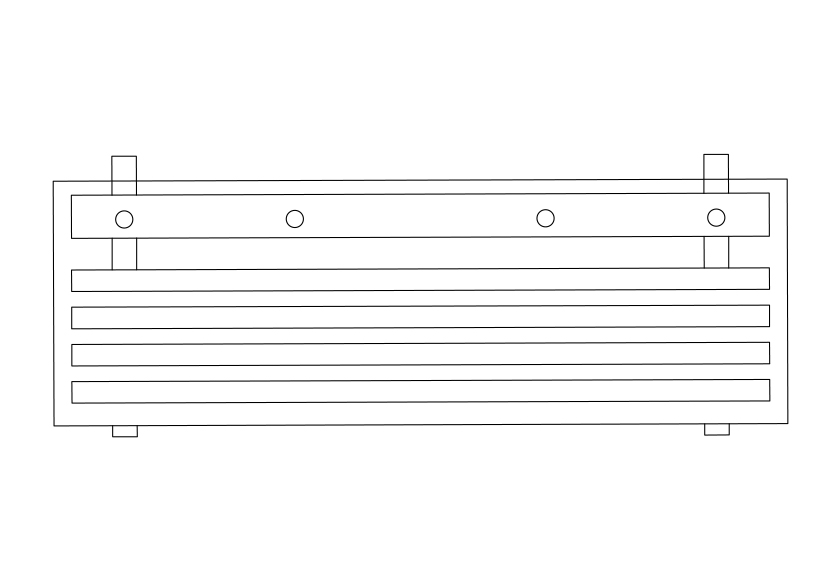
Free Grass Elevation CAD Block – DWG, DXF, PDF Format
Poaceae (/poʊˈeɪsiaɪ/) or Gramineae (/ɡrəˈmɪniaɪ/) is a large and nearly ubiquitous family of monocotyledonous flowering plants known as grasses. It includes the cereal grasses, bamboos and the grasses of natural grassland and species cultivated in lawns and pasture. The latter are commonly referred to collectively as grass.
With around 780 genera and around 12,000 species,[4] the Poaceae is the fifth-largest plant family, following the Asteraceae, Orchidaceae, Fabaceae and Rubiaceae.
The Poaceae are the most economically important plant family, providing staple foods from domesticated cereal crops such as maize, wheat, rice, barley, and millet as well as feed for meat-producing animals. They provide, through direct human consumption, just over one-half (51%) of all dietary energy; rice provides 20%, wheat supplies 20%, maize (corn) 5.5%, and other grains 6%. Some members of the Poaceae are used as building materials (bamboo, thatch, and straw); others can provide a source of biofuel, primarily via the conversion of maize to ethanol.
Grasses have stems that are hollow except at the nodes and narrow alternate leaves borne in two ranks. The lower part of each leaf encloses the stem, forming a leaf-sheath. The leaf grows from the base of the blade, an adaptation allowing it to cope with frequent grazing.
Grasslands such as savannah and prairie where grasses are dominant are estimated to constitute 40.5% of the land area of the Earth, excluding Greenland and Antarctica. Grasses are also an important part of the vegetation in many other habitats, including wetlands, forests and tundra.
Though they are commonly called "grasses", seagrasses, rushes, and sedges fall outside this family. The rushes and sedges are related to the Poaceae, being members of the order Poales, but the seagrasses are members of order Alismatales.
You need more Landscape DWG and AutoCAD Blocks and Drawings? Check the Landscape Category. Access our entire CAD blocks and DWG drawings on our homepage. For free 3D files, visit Freepolygon. Need free vector illustrations? Check out Vectorfreefiles. Stay updated with the latest design news and insights at Designrecap. Explore a global directory of design professionals and firms at Meshegg. Explore more resources for architecture students and professionals at Archiskills.
REQUEST A FILE FOR FREE
SIMILAR KEYWORDS

FAQ
-
01.
HOW CAN I EARN MONEY BY UPLOADING MY CAD FILES TO FREECADS?
You can earn ad revenue from your uploaded models. Every file you upload gets its own page with ads, and you receive an 80% share of the revenue generated from that page. The more people view your work, the more you earn.
-
02.
WHEN AND HOW ARE PAYMENTS MADE TO CREATORS?
Earnings are updated daily and paid every month using the industry standard net 40 system. That means revenue generated in one month is paid 40 days later, directly to your PayPal account.
-
03.
WHAT TYPES OF FILES CAN I UPLOAD OR DOWNLOAD ON FREECADS?
Freecads supports a wide range of professional file formats including DWG, DXF, PDF, SKP, RVT, IFC, 3DM, STEP, STP, PLN, DGN, IGS, SLDPRT, FCSTD, IPT, PRT, CATPART, 3DXML, IMODEL, and more. You can upload and download 2D and 3D models across multiple design platforms.
-
04.
WHAT IS THE DIFFERENCE BETWEEN FREE AND PREMIUM MEMBERSHIPS?
Both Free and Premium members can upload and earn from their files. Free Members can upload up to 30 files per month and track their last 30 downloads, while Premium Members enjoy an ad free experience throughout the site, unlimited uploads, unlimited download history, and priority access to new features for €2.9 per month or €19.9 per year. Both tiers can still download an unlimited amount of files.
-
05.
WHAT IS NEW IN THE LATEST VERSION OF FREECADS?
The new Freecads introduces a redesigned interface, faster search, expanded file support, and a creator dashboard that lets you track views, downloads, and earnings in real time. It is now simpler, faster, and fairer for everyone.